


Blog
Technical Advice: Car Services, Engine Oil and Oil Filters
Author: Gil Sher – A.M.I.A.M.E.
The Effects of Infrequent Driving, Short Journeys and the Importance of Regular Oil and Filter Replacement
1. Why infrequent driving and short journeys can harm an engine
A vehicle used infrequently and mainly for short journeys can experience greater engine oil deterioration than one travelling much farther under normal conditions. Oil condition depends not only on distance travelled, but also on operating temperature, running time and driving conditions.
2. Moisture accumulation in engine oil
When a cold engine starts, combustion water vapour enters the crankcase through normal leakage past the piston rings, known as blow-by. During sufficiently long operation at normal temperature, much of this moisture evaporates and is removed through the crankcase ventilation system.
On repeated 5–10-minute journeys, the oil does not become hot enough for long enough to remove the vapour, contributing to:
- Oil emulsification and sludge formation.
- Corrosion of internal engine components.
- Faster deterioration of the oil’s protective properties.
3. Fuel dilution of engine oil
Cold engines require additional fuel during warm-up. Some unburned fuel can pass the piston rings into the crankcase and mix with the oil. During sustained operation at normal temperature, some of this fuel evaporates, but repeated short trips may prevent sufficient evaporation.
Fuel dilution can reduce oil viscosity and weaken the lubricating film protecting bearings, cylinder walls and other moving components.
This can be particularly significant in some modern direct-injection engines.
4. Sludge formation and oil filter contamination
Moisture, fuel, combustion by-products and oil oxidation can promote sludge and deposits. The oil filter captures some contaminants, gradually reducing its dirt-holding capacity.
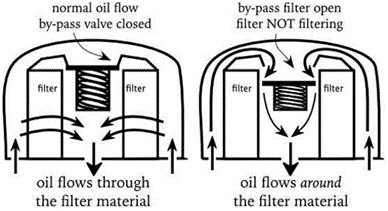
However, an oil filter cannot effectively remove dissolved fuel or water from engine oil. If it becomes excessively restricted, its bypass valve may open, allowing oil to circulate without passing through the filter element.
5. Why low annual kilometres can be misleading
Consider two vehicles:
Vehicle A: Regular journeys of 30–80 minutes.
Vehicle B: Infrequent journeys of 5–10 minutes.
Vehicle B may travel only one-fifth as far as Vehicle A, but it can suffer disproportionately from moisture accumulation, fuel dilution and repeated cold starts.
This demonstrates why kilometres travelled alone are not always a reliable measure of engine oil condition.
6. Why an occasional longer journey can help
A continuous journey of approximately 30–45 minutes, after the engine has warmed up, may help evaporate accumulated moisture and some fuel contamination. However, it cannot remove existing sludge, reverse chemical deterioration or replace regular servicing.
A coolant temperature gauge reaching normal does not necessarily mean the engine oil has reached full operating temperature. Oil commonly takes longer to warm, especially in cold weather and during short journeys.
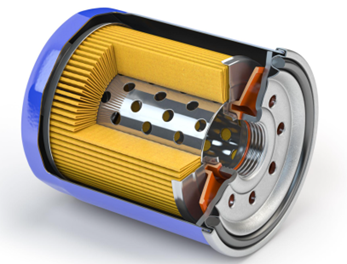
7. How an engine oil filter works
An oil filter removes harmful particles before they circulate through the engine and cause premature wear. Oil can collect microscopic metal particles, carbon deposits, soot and other impurities during operation.
The filter traps many of these contaminants while allowing oil to reach the crankshaft bearings, camshafts and other moving components.
An effective filter must:
- Remove harmful particles from circulating oil.
- Permit sufficient oil flow to maintain proper lubrication.
Both functions are essential to engine protection.
8. What happens when an oil filter becomes blocked?
As contaminants accumulate, the filter can restrict oil flow. Most modern systems include a bypass valve, either in the filter or filter housing. If the pressure difference becomes excessive, the valve opens so oil can continue circulating without passing through the filtering material.
This is an intentional safety feature.
The engine is better protected by a continuous supply of temporarily unfiltered oil than by an inadequate supply of filtered oil.
While the valve is open, contaminants that would normally be trapped can circulate and potentially accelerate wear.
The valve opening does not necessarily indicate a blocked filter. It may also open temporarily when cold, thick oil creates an excessive pressure differential. Its operation depends on the engine and filter design.
9. Why the oil filter should be replaced with the engine oil
Changing the oil without replacing the filter leaves accumulated contaminants within the lubrication system. A used filter may also have less remaining capacity, increasing the likelihood of bypass-valve operation.
Replacing the filter with one that meets the manufacturer’s specifications helps ensure that fresh oil circulates through an effective filtration system, protecting the engine and supporting a longer service life.
10. Recommended oil and filter replacement intervals
Vehicles driven infrequently or mainly on short journeys are often classified by manufacturers as operating under severe conditions. They may therefore require oil and filter replacement every six months rather than relying solely on a normal distance-based interval.
The manufacturer’s specified service interval should always take precedence.
Modern oils contain additives that protect against wear, corrosion, oxidation and contamination, but these additives gradually become depleted or less effective.
Replacing the filter alone cannot restore deteriorated oil, while replacing the oil but retaining a contaminated filter can compromise the effectiveness of the service.
Conclusion
Engine oil and oil filters are essential parts of the same lubrication system.
Short journeys can allow moisture, fuel and other contaminants to accumulate even when annual kilometres are low.
Replacing both the oil and filter at intervals suited to the vehicle’s operating conditions and the manufacturer’s recommendations helps maintain lubrication, reduce engine wear and minimise the risk of costly repairs.
RECENT POSTS & TIPS
- Technical Advice: Car Services, Engine Oil and Oil Filters
- Smell Petrol? How We Found a Hidden Fuel Leak
- Gil’s Mechanical Skills, Saved The Customer
- Brake Calliper Failure a Technical Treatise
- Steering Box Vs Hydraulic Steering Systems: Information &Comparison
- Car Turbo Explanation: How and Why They Work
- Fault in ABS Braking System
- Throttle Body Cleaning: Improve Engine Performance and Efficiency
- Transition From Paper Logbooks To Digital Service Records
- Local Mechanic Reducing Waste & Emissions
- What is Petrol?
- Why Have a Cabin Filter in your car?
- Comprehensive car insurance for electric vehicles (EVs) tends to be more expensive
- How to Trace a Fault in an EV High Voltage Battery
- Never Lose Your Car Keys Again
- Cross Section Of A Typical Water Themostat
- Testing of EV AC Electric Motor Phase Resistance Balance Test of The Windings
- Brake Fade
- Instructions for Jump Starting a Car
- Low-Pressure Exhaust Recirculation Filter (ERF)
